

January 2026
COLD CHAIN
How Temperature Fluctuations Impact Shelf-Life in Ready-to-Eat and Cured Meats
Exploring how processing, microbial risk, and cold chain conditions shape the shelf-life of ready-to-eat foods.
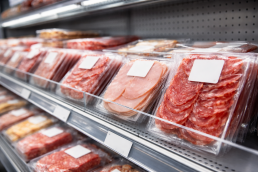
Shelf-life is often misunderstood as a simple countdown printed on packaging. In reality, it is a dynamic outcome influenced by biological, chemical, and physical processes that respond continuously to environmental conditions, especially temperature. For cured meats and ready-to-eat (RTE) foods, maintaining consistent conditions through effective cold chain monitoring is critical for protecting shelf-life and food safety.
Why Ready-to-Eat and Cured Foods Are Especially Vulnerable
RTE and cured meats undergo multiple processing steps — cooking, curing, slicing, packaging, and handling — that alter their structure and increase sensitivity to temperature changes. Processing can:
- Disrupt muscle structure
- Expose nutrients
- Increase surface area
- Redistribute moisture
- Increase oxygen exposure
- Introduce post-process contamination
Although salt, curing agents, reduced water activity, and modified atmosphere packaging help inhibit microbial growth, these controls are designed to function within specific temperature ranges.
Importantly, ready-to-eat products are not sterile. Low levels of microorganisms may remain after processing or be introduced during slicing and packaging. Under favorable conditions, temperature deviations can accelerate the growth of psychrotolerant pathogens such as Listeria monocytogenes, a key concern in Listeria control for ready-to-eat foods. Because these products are consumed without further cooking, temperature control becomes a critical safety barrier.
RTE products also typically have longer shelf-life than fresh meats, meaning they spend more time in storage, transport, and retail environments. This extended exposure window increases the likelihood of temperature fluctuations across the cold chain, giving microorganisms more opportunity to grow if conditions deviate from recommended ranges.

How Temperature Fluctuations Accelerate Deterioration
Temperature fluctuations affect more than microbial growth — they also accelerate chemical and physical degradation processes in meat products.
Higher or inconsistent temperatures can drive:
-
Lipid oxidation
-
Protein breakdown
-
Off-flavors and odors
-
Texture and moisture changes
-
Packaging performance issues
Even short temperature deviations can significantly accelerate these reactions, reducing both product quality and usable shelf-life. For example, two identical products can deteriorate differently throughout the cold chain if one is stored consistently at 2°C and the other is exposed to repeated 6–8°C fluctuations.
Why Cold Chain Visibility Is Now Essential
Modern food science recognizes shelf-life as dynamic. Tools such as time–temperature indicators, predictive microbial and shelf-life modelling, smart packaging, and advanced monitoring technologies aim to reflect real storage conditions rather than ideal assumptions.
Monitoring alone does not prevent spoilage, but it enables proactive intervention when temperature deviations occur.
This is where solutions like BlakBear play an important role — providing real-time cold chain monitoring and visibility so producers, distributors, and retailers can identify risks early and protect product quality and safety.
Schedule a demo
Let's shape the future of food quality and food waste.