
May 16, 2024
SHELF LIFE
BlakBear Shelf-life
Understanding what shelf-life really means and how BlakBear is changing the way it’s measured.
What is shelf-life?
Shelf life is the length of time a product remains safe, wholesome, and of acceptable quality under expected storage conditions. For fresh food products, shelf-life is primarily determined by microbial growth, chemical changes, and physical deterioration.
Traditional shelf-life testing involves laboratory analysis of product samples over time, measuring microbial counts, sensory attributes, and chemical markers to determine the point at which product quality falls below acceptable standards.
How is shelf-life set today?
Shelf life dates on food packaging are typically set using a combination of microbiological testing, sensory evaluation, and safety margins. Producers conduct shelf-life studies under controlled conditions and then apply a safety factor to account for variability in real-world storage and distribution.
This approach, while effective for ensuring safety, tends to be conservative. The result is that many products are still perfectly safe and of good quality at their printed expiry date, leading to unnecessary waste.
How BlakBear measures shelf-life differently
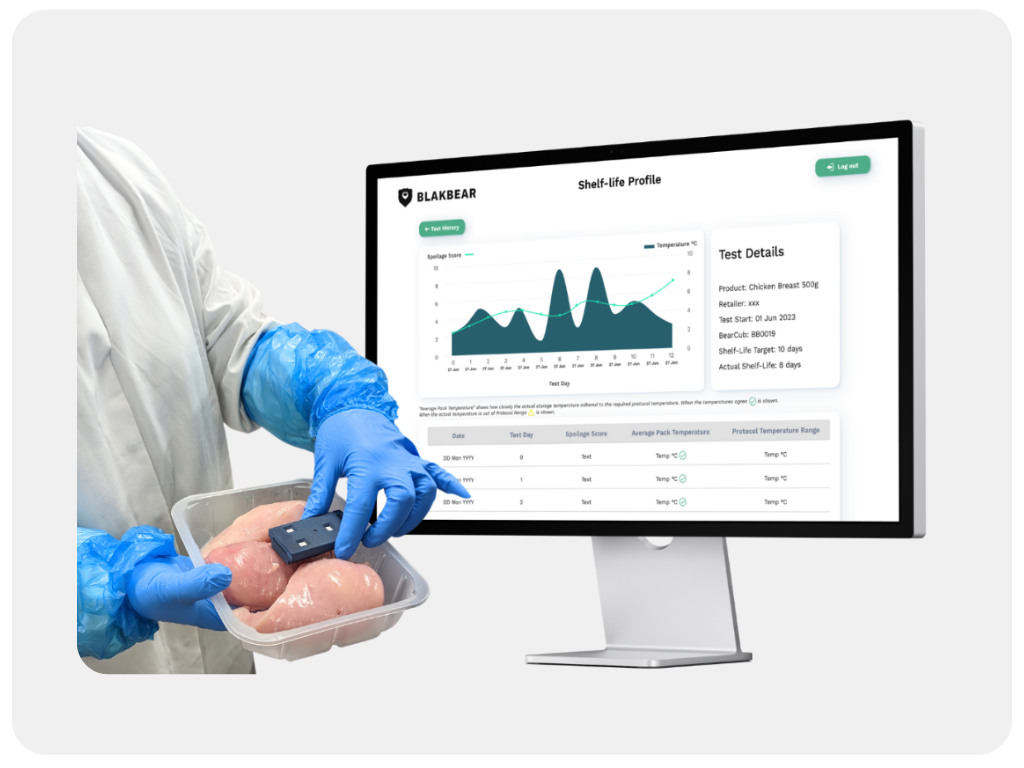
BlakBear’s sensor technology measures the actual freshness of each individual pack of food in real-time. By monitoring spoilage gases and temperature continuously, our sensors can provide a dynamic, data-driven assessment of shelf-life that reflects actual product conditions rather than worst-case assumptions.
This approach generates 1,000 times more data per pack than traditional testing methods, providing unprecedented visibility into product quality and enabling more accurate, less wasteful shelf-life management.
Book a Demo
See how BlakBear monitors freshness across the cold chain.