
May 16, 2024
CASE STUDY
Spinach shelf-life study
Measuring real-time freshness of spinach using BlakBear sensors across shelf-life.
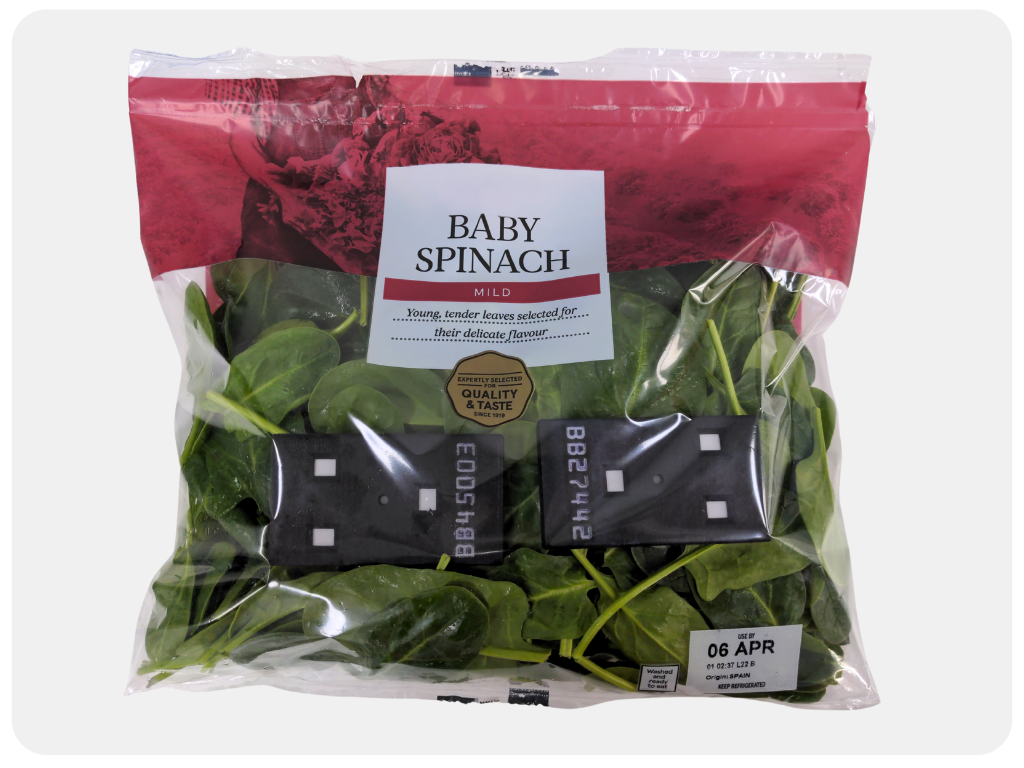
Unlocking extra life: Spinach
We conducted an experiment involving two packs of spinach, stored at chilled refrigerator temperatures (4°C/39°F), to measure and analyze spoilage over time. Our findings suggest that, at this temperature, extending the use-by date by 7 days does not compromise quality. This extension beyond the current standard can potentially decrease waste in retail stores by 70%. This adjustment could lead to annual savings of $109 million in salad waste, for the largest retailer in the U.S.
Method
We procured two packs of spinach from a local supermarket and repackaged them with a BlakBear sensor. The packages were stored at 4°C/39°F, mimicking retailer fridges. Our sensors continuously monitored spoilage gases and temperatures throughout the product’s shelf life. The data was displayed on our cloud-based web application. BlakBear’s machine learning algorithms translated these sensor readings into odor scores termed “digital odor”. The end of the shelf life was determined when digital odor surpassed 40%, corresponding to mildly noticeable odor. Accordingly, our measured use-by date is one day before reaching this spoilage limit.
Conclusion
Our study confirmed that the spinach shelf life could be extended by 7 days, in 4°C/39°F conditions, without compromising food quality. This extension in shelf life could reduce food waste in retail stores by 70%, for example by doubling the potential sales time. For the top retailer in the United States and the United Kingdom, this change represents potential savings of $109 million and £44 million, respectively, in reduced salad waste.
Furthermore, nationally, doubling the sales time for salads could lead to waste reductions valued at approximately £705 million in the UK and $1.7 billion in the US.
References
M.E. Buisman, R. Haijema, J.M. Bloemhof-Ruwaard, “Discounting and Dynamic Shelf Life to Reduce Fresh Food Waste at Retailers,” International Journal of Production Economics, Volume 209, 2019, Pages 274-284.
BlakBear customer data and market research, assuming salads accounts for 1.5% of food sales with a waste rate of 8% across stores and supply chains.
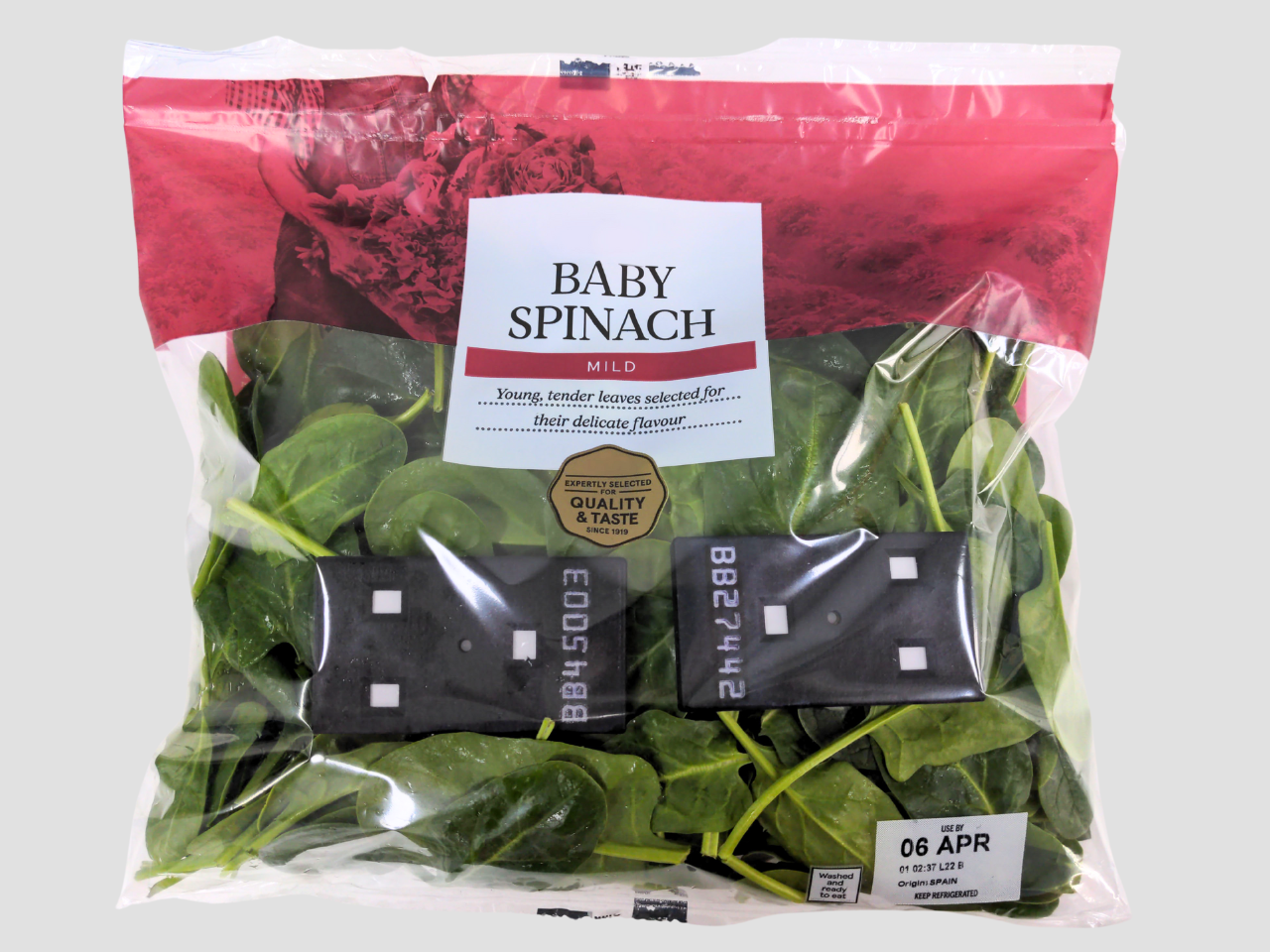
What you'll receive:
A comprehensive report featuring spoilage and temperature data captured throughout the trial and a photo gallery documenting the condition of the spinach with our sensors over the shelf life period.
See the data
Access detailed data and visual documentation from this trial. This offer is specially tailored for potential industry partners and food retailers.
Our sensors have 91% correlation with microbiological spoilage organisms
Campden BRI concluded our sensor data shows strong correlation (R>0.9) with microbiological and sensory testing.
Discover moreBook a Demo
See how BlakBear monitors freshness across the cold chain.